Visit the Murray: Fifteen river towns, both banks
Murray Regional Tourism’s site for a two-state river region: fifteen town hubs, five See & Do pillars and Operator tours and experiences synced from ATDW.
Visit visitthemurray.com.au (opens in a new tab)- Client
- Murray Regional Tourism
- Region
- New South WalesVictoria
- Edition
- Tourism Edition
The challenge
The Murray is Australia’s longest river, stretching more than 2,500 kilometres between the Snowy Mountains and its mouth in South Australia, and, as Visit the Murray puts it on its own home page, “a state border and lifeblood to millions”. The destination itself is the stretch the river shares between New South Wales and Victoria: councils and Operators on both banks, and fifteen town hubs from Wentworth and Mildura in the west to Albury Wodonga and Holbrook in the east.
Murray Regional Tourism’s consumer site has to hold all of that together. It has to present one holiday with many starting points while each river town keeps an identity of its own. And it carries a heavy content load: the tours and experiences. Paddlesteamer cruises, houseboats, guided First Nations experiences and scenic flights, with hours, offers and booking links that change through the year.
What we built
A river in three reaches
The site gives each of fifteen town hubs its own page under three regional reaches (West, Central and East), with a villages page for each reach so the smaller places are not lost. The hubs run from Mildura, Wentworth and Swan Hill through Echuca-Moama, Deniliquin and Tocumwal to Yarrawonga Mulwala, Corowa, Albury Wodonga and Holbrook. Each hub follows the same shape: an introduction, a snapshot of things to do, then See & Do, Eat & Drink and Stay drawn from live Products, with the local Visitor Information Centre’s details. A Visitor who lands on Echuca-Moama from a search result gets the whole town in one scroll, and the same pattern waits in the next town upstream.

Five ways to see and do
Content sits under five See & Do pillars: The River (fishing, paddlesteamers, canoe and kayaking, boating and water sports), Outdoor Activities (golf, walking and cycling, 4WD adventures, scenic flights), Eat & Drink, Art, Culture & Heritage (galleries and outdoor art, First Nations history and experiences, European heritage) and Natural Landscapes (national parks, river beaches). Stay is split into five types, houseboats among them, and What’s On carries events and farmers’ markets. The First Nations History & Experiences pages sit under Art, Culture & Heritage.
Tours and experiences that present themselves
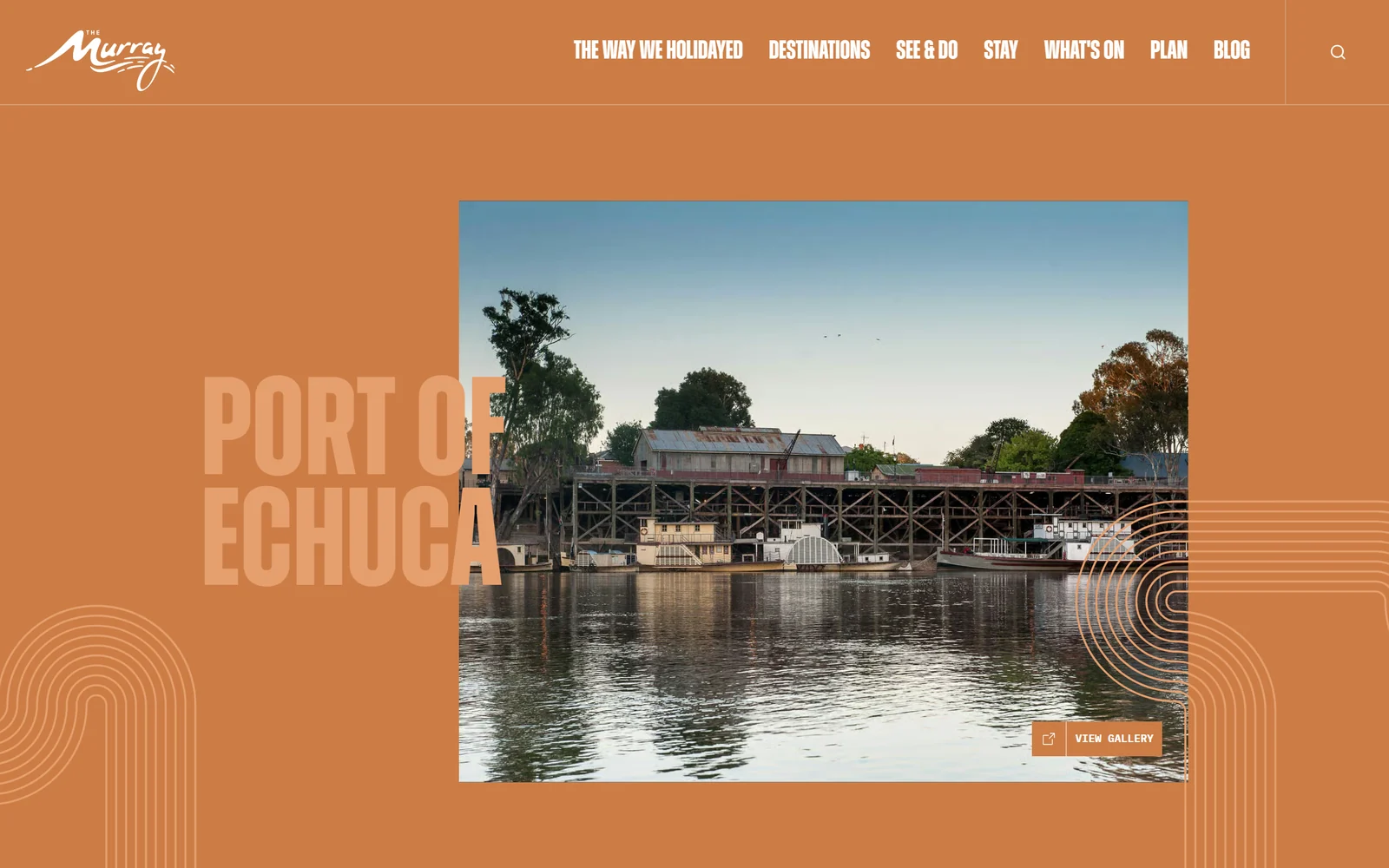
This is the part of the build the client singled out. Operator Products are synchronised from the Australian Tourism Data Warehouse and rendered as pages that carry what the Operator supplies: description, opening hours, booking link, facilities, gallery, directions and a map pin, plus accessibility and accreditations where held. The Port of Echuca Discovery Centre’s page carries its National Trust, Quality Tourism and Sustainable Tourism marks beside its hours and booking link. Content is synced into Roam on a schedule, so the site stays up even if ATDW doesn’t.
On top of the sync sits curation. The paddlesteamers page introduces the fleet by town, from P.S. Adelaide, built in 1866, in Echuca-Moama to the boats of Swan Hill and Mildura, and the river pages carry editorial “Must Do” lists that send Visitors to McLean Beach, Koondrook Wharf and the Wymah Ferry. The team adds its own point of view to the ATDW facts. See how ATDW sync works.
Design approach
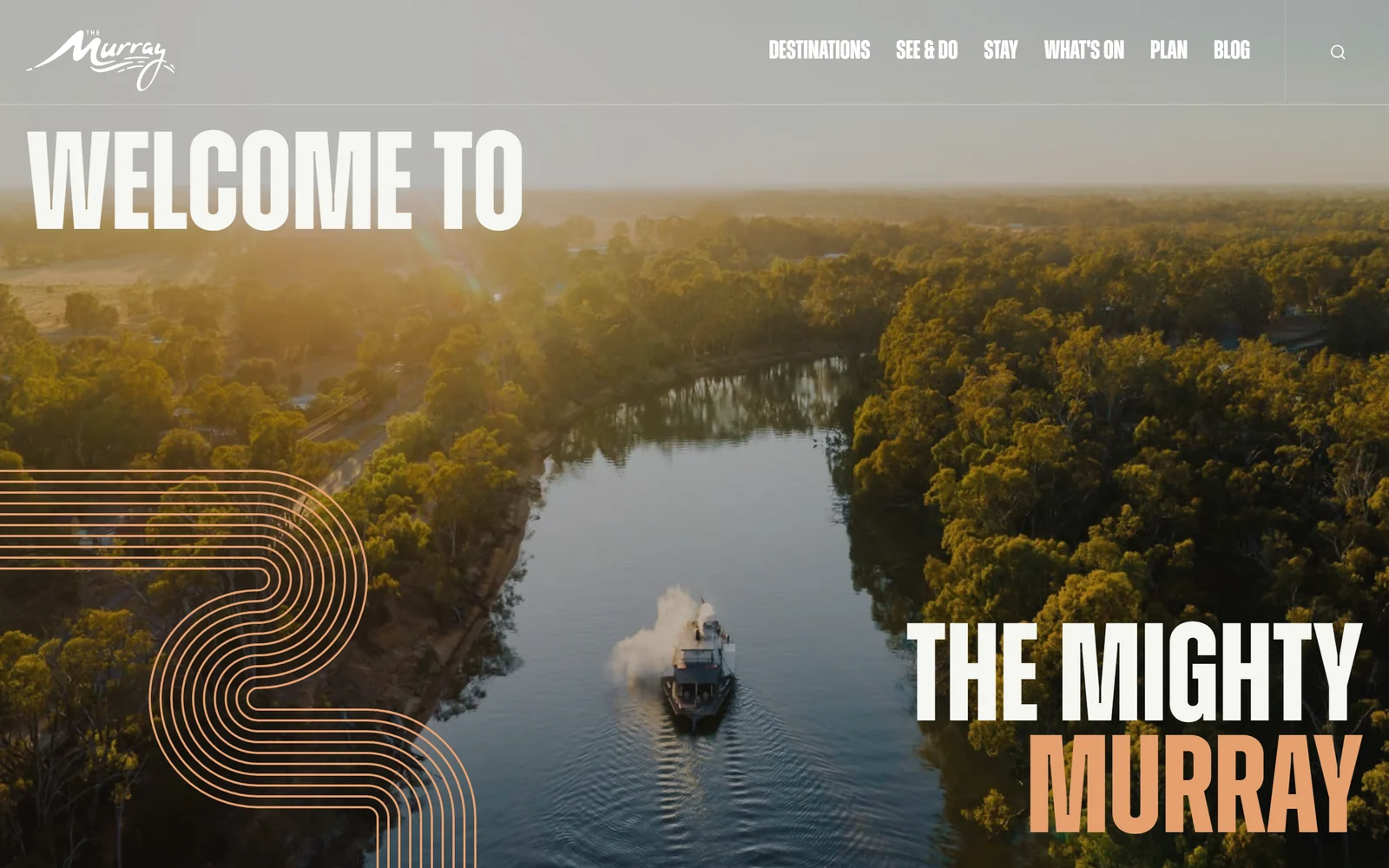
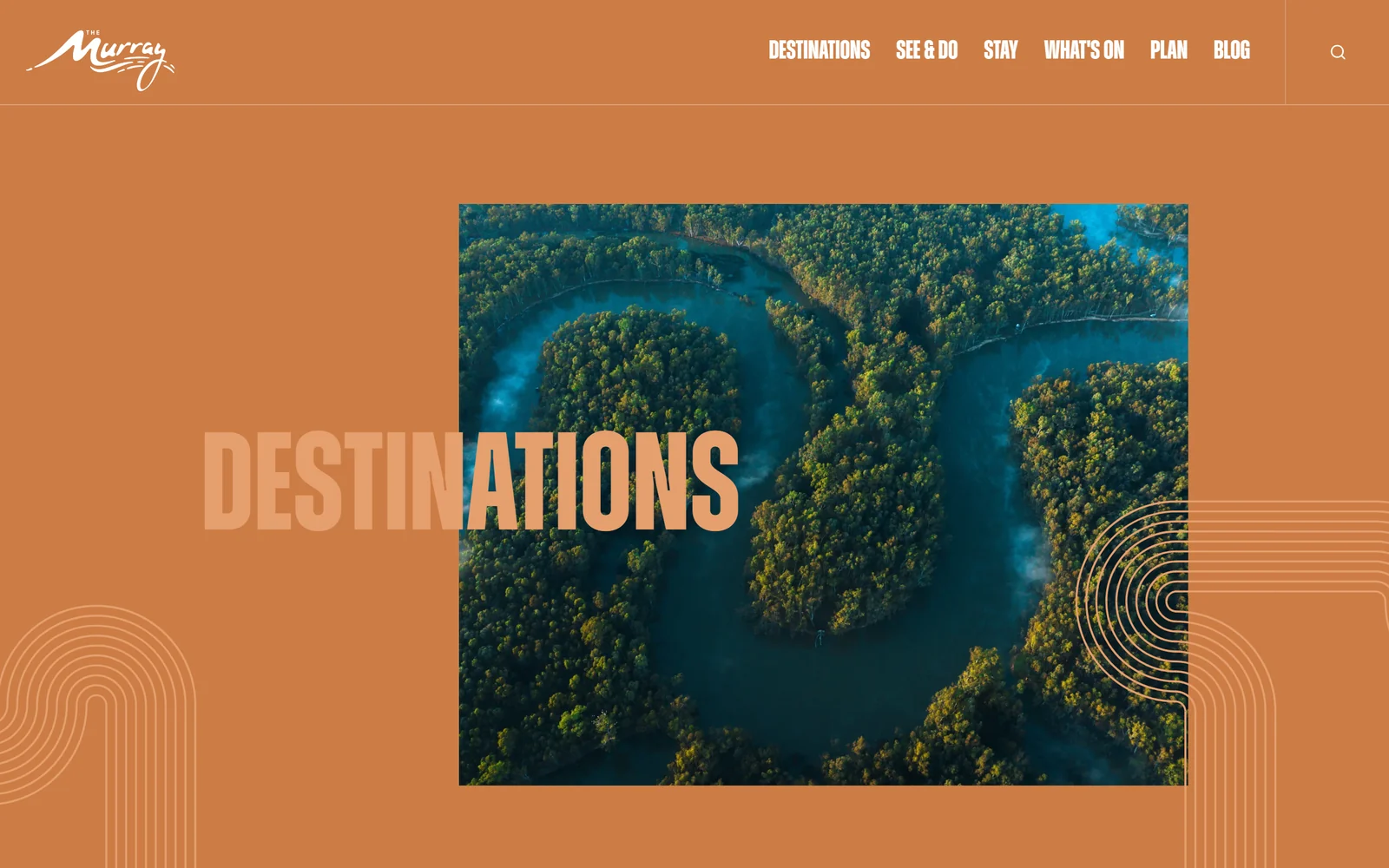
The site pairs a warm clay ground and paper-white reading panels with full-bleed river photography: a paddlesteamer at dawn on the home page, the river winding through forest on Destinations. Headlines are tall condensed capitals (“Welcome to the Mighty Murray” fills the first screen), set against a quiet serif for the reading, and a concentric-arc motif recurs in the page headers. The build is mobile-first.
Campaigns, stories and planning tools
The site is also where the campaigns run. “The Way We Holidayed” is a content hub with a quiz, “Find your next Murray tradition”, that asks what makes a holiday for you and hands back one of six Murray holiday personalities, from The Skipper to The Potterer. Alongside it sit the Silo Art Trail itinerary, a blog, a newsletter, live river cameras and a Plan section covering getting here and about, dog-friendly travel and the Visitor Information Centres.
Under the hood
Like every Roam site, Visit the Murray carries AI Discovery as standard. Every Roam site automatically generates and maintains an llms.txt file, and when an AI agent visits a Roam site it receives clean, structured markdown instead of raw HTML. The site runs on Roam’s shared infrastructure, hosted on AWS behind Cloudflare’s CDN, DDoS protection and Web Application Firewall, and the network shares the cost of platform improvements.
The outcome
Visitors can start from the river, from a town or from the holiday quiz, and reach an Operator page with its hours, booking link, facilities and map. Murray Regional Tourism’s own assessment is specific: “[The enhanced ATDW integration] allows us to provide comprehensive information in an easily digestible format, significantly improving the user experience.”
A feature built for any Roam destination reaches this site too, at no additional cost. The client’s view of that relationship: “The support and continued development of Roam is excellent. If you are a RTB looking to improve your digital footprint, Roam is a great partner.”
In their words
You will regret waiting so long to work with Roam.
See Roam with your destination in mind.
Tell us about your destination, and we’ll build your demo around it.
- No hidden fees
- Training and support included
- Live in 6-8 weeks